

6061 vs 7075 Aluminum: Which Is Better for CNC Machining?
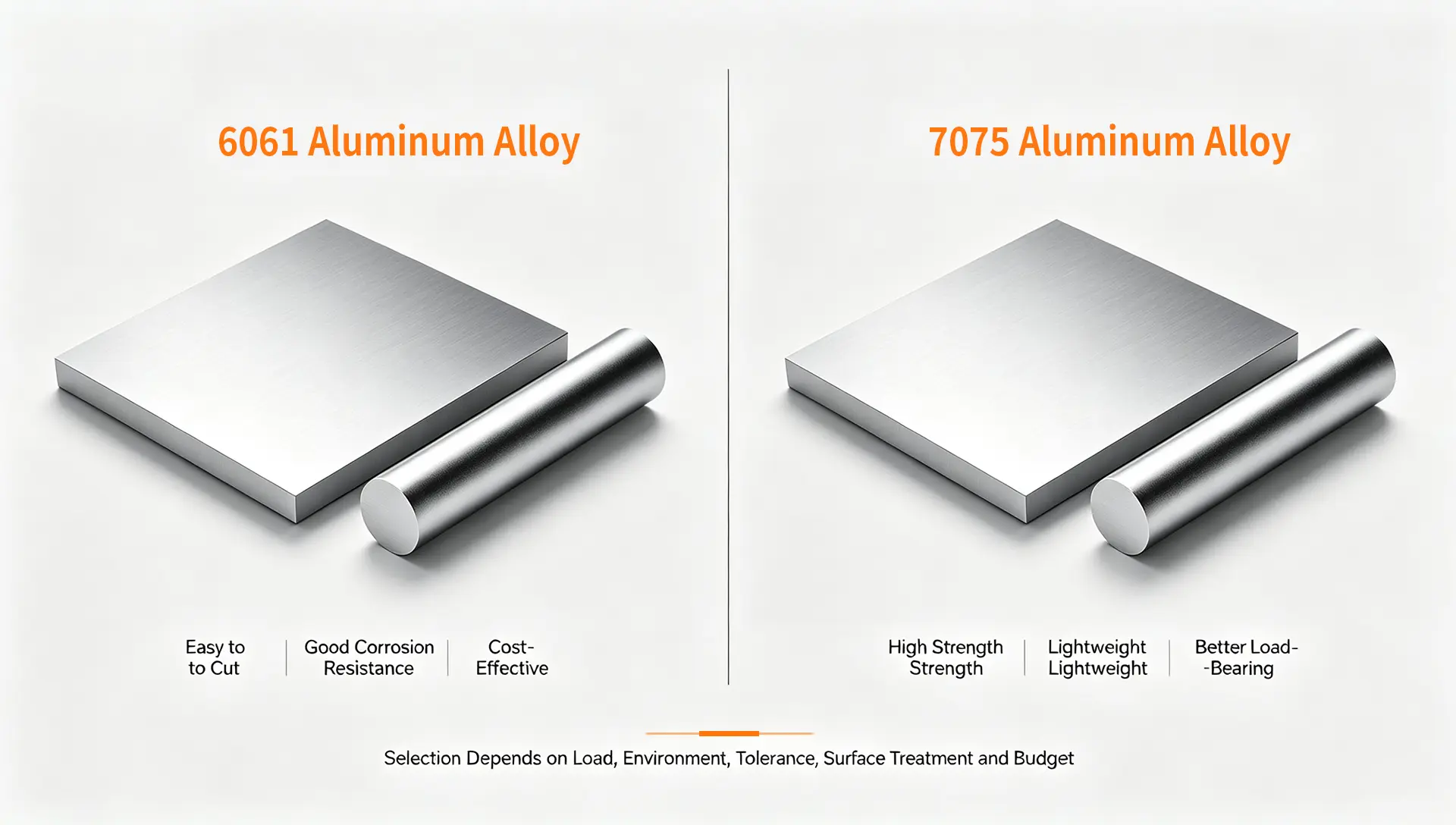
6061 and 7075 aluminum serve different CNC machining needs. 6061 offers easier machining, better corrosion resistance, and lower cost, while 7075 provides much higher strength. The right choice depends on load, environment, tolerance, finish, and budget.
Table of Contents
- 6061 vs 7075 Aluminum: Quick Comparison
- What Is 6061 Aluminum?
- What Is 7075 Aluminum?
- 6061 vs 7075 Aluminum: Key Differences
- 6061 vs 7075 for CNC Machining
- 6061 vs 7075 Applications by Industry
- 6061 or 7075: Which Should You Choose?
- 6061 vs 7075 Aluminum FAQs
- CNC Machining 6061 and 7075 Aluminum With REKO
6061 vs 7075 Aluminum: Quick Comparison
If you need a fast answer, start here. 6061 is usually the better all-round material for general CNC parts. 7075 is the better choice when high strength is a real design requirement.
| If You Need | Better Choice | Why |
|---|---|---|
| Lower material and machining cost | 6061 | More affordable and easy to machine |
| Better corrosion resistance | 6061 | More suitable for many normal outdoor or humid uses |
| Welding after machining | 6061 | Much better weldability |
| Consistent cosmetic anodising | 6061 | Usually gives a cleaner, more predictable finish |
| Very high strength | 7075 | Far higher strength than 6061 |
| High-load lightweight structures | 7075 | High strength-to-weight ratio |
| Aerospace-style structural performance | 7075 | Well suited to demanding, weight-sensitive parts |
Choose 6061 for most general CNC parts; choose 7075 when the extra strength has a clear purpose.
This matters because the alloy affects more than strength. It can change cutting forces, tool wear, surface finish, anodising results, welding options and the total finished-part cost. If you are comparing 6061 and 7075 for a real project, send your drawing to REKO. We can review the load, tolerance, finish and application before machining starts.
What Is 6061 Aluminum?
6061 aluminium is an aluminium-magnesium-silicon alloy known for its balance of strength, machinability, corrosion resistance and cost. For CNC machining, 6061-T6 is one of the most common conditions because the heat treatment improves strength and hardness while keeping the material practical to cut.
If you are comparing other aluminum materials for CNC machining, REKO’s material page provides an overview of common aluminium options and finishing choices.
6061 Aluminum Composition
The main alloying elements in 6061 are magnesium and silicon, with smaller amounts of other elements. This chemistry gives 6061 a useful middle ground: it has enough strength for many engineering parts but remains easy to cut, form and finish. For buyers, that balance is important because it can reduce machining difficulty without giving up the performance needed for most general components.
6061 Aluminum Properties
· Good general strength
· Excellent machinability
· Good corrosion resistance
· Good weldability
· Reliable anodising performance
· Good strength-to-weight ratio
· Usually lower cost than 7075
6061 is not the strongest aluminium grade, but many parts do not need maximum strength. Housings, brackets, fixtures, mounting plates and machine components often need a balanced material that is accurate, easy to finish and economical to produce. That is where 6061 performs very well.
Common Uses of 6061 Aluminum
6061 is widely used for electronic housings, machine brackets, automation parts, fixtures, automotive components, prototype parts and general structural components. It is also a common choice when the finished part will be bead blasted and anodised.
For example, an electronic housing often needs accurate openings, threaded holes, a clean surface and good corrosion resistance, but it may not carry a large structural load. A 6061 housing can meet those needs without the higher material cost of 7075. The same logic applies to many fixtures, sensor mounts and machine brackets.
Choose 6061 when balance matters more than maximum strength.
What Is 7075 Aluminum?
7075 aluminium is a high-strength aluminium-zinc alloy. Zinc, magnesium and copper give it much higher strength than 6061 while keeping the weight low. 7075-T6 is widely used for CNC parts that must stay strong under high stress or repeated load.
7075 Aluminum Composition
7075 uses zinc as its main alloying element, with magnesium and copper also contributing to strength. This composition is very different from 6061 and is the reason 7075 is used for more demanding structural parts. The alloy is designed for performance under load rather than for the lowest material cost or easiest welding.
7075 Aluminum Properties
· Very high strength
· High hardness
· Good fatigue resistance
· Good machinability
· Low weight
· Strong performance under heavy loads
The main reason to choose 7075 is its high strength-to-weight ratio. It can help designers keep a part light without making it too weak. That makes it useful in aerospace, drones, robotics, motorsport and other high-performance equipment.
The trade-off is that 7075 normally costs more, has lower corrosion resistance than 6061 and is not a good choice for normal welding. Its higher hardness can also make cutting conditions and tool control more important.
That does not mean 7075 is difficult to machine. With the correct tool, cutting strategy and clamping, it can produce accurate features and a very clean machined surface. The key point is that the process should be planned around the material instead of treating 7075 exactly like a softer general-purpose aluminium grade.
Common Uses of 7075 Aluminum
Typical applications include aircraft brackets, drone frames, robotic joints, high-load mounts, racing components and other lightweight structural parts. 7075 makes sense when the extra strength brings real value to the final design.
Choose 7075 for a real strength requirement, not simply because the number is higher.
6061 vs 7075 Aluminum: Key Differences
The main difference is simple: 6061 is the more balanced and economical alloy, while 7075 is the much stronger alloy. The table below shows the main decision points.
| Property | 6061 Aluminium | 7075 Aluminium |
|---|---|---|
| Strength | Medium | Very high |
| Hardness | Medium | Higher |
| Weight | Light | Light |
| Corrosion resistance | Better | Lower |
| Machinability | Excellent | Good |
| Weldability | Good | Poor |
| Anodising | Very good | Good, but colour may vary |
| Relative cost | Lower | Higher |
Strength, Hardness and Weight
7075 can handle much higher loads and is harder than 6061. The density difference is small, so 7075 provides more strength without a large weight penalty. This is why it is attractive for aircraft, drones and moving structures where every gram matters.
6061 is still strong enough for many normal engineering parts. If it already meets the load requirement, changing to 7075 may only raise material cost without improving the real function of the product.
Corrosion Resistance and Weldability
6061 has better natural corrosion resistance and is easier to weld. It is a safer choice for many humid or outdoor applications and for parts that will be welded after CNC machining. 7075 can be protected with a suitable surface treatment, but normal welding is generally avoided because it can reduce strength and increase cracking risk.
If the design must be welded, this single point can make the material decision much easier. A 6061 machined component can be joined into a larger assembly using common welding processes. A 7075 part is more often joined with screws, bolts or other mechanical fasteners when its high strength is needed.
Machinability, Anodising and Cost
Both alloys machine well, but 6061 is more forgiving. Its lower hardness can reduce tool wear and make it easier to produce general-purpose parts. 7075 can give a clean machined surface, but the cutting process needs to match the material.
6061 is also usually easier when cosmetic anodising and colour consistency are important. 7075 can be anodised, but the alloy chemistry can make colour less predictable. Cost follows the same pattern: 6061 is usually cheaper, while 7075 should be used when its added strength justifies the higher price.
It is also worth looking beyond the raw material price. The finished-part cost can include machining time, tool wear, set-ups, surface treatment and inspection. A more expensive alloy can still be the correct choice if it prevents a structural problem, while a stronger alloy can be wasted money if the part never uses that extra performance.
6061 vs 7075 for CNC Machining
For CNC machining, material performance is only one part of the decision. The alloy can also affect cutting forces, tool life, tolerance control, deformation, finishing and cycle time.
Machining Performance and Tool Life
6061 is easy to mill, turn, drill and thread. It works well for pockets, slots, thin walls and general precision features. 7075 also machines very well, but its higher strength and hardness can increase cutting forces and make tool condition more important. Good tool choice, feeds, speeds and heat control help keep the result stable.
For production planning, this can affect cycle time and tool life. 6061 is forgiving when the job contains many pockets, holes or threads. 7075 can still run efficiently, but the cutting parameters need to match the higher material strength. On a difficult part, the supplier may also change the roughing and finishing sequence to keep the part stable and protect the final dimensions.
Tolerance and Thin-Wall Parts
Both 6061-T6 and 7075-T6 can be used for precision CNC parts. However, tight tolerance is not controlled by alloy alone. Thin walls, deep pockets, large material removal and poor clamping can all cause a part to move after machining. A stable process often matters as much as the material.
When a large amount of material is removed, internal stress can be released and the part may move slightly. This is especially important for wide plates, long features and thin-wall structures. A good machining plan may use staged material removal, careful clamping and inspection between operations rather than trying to finish every feature in one aggressive cut.
6061 is common for thin-wall housings and lightweight structures because it is easy to machine. 7075 may be useful when the thin wall also needs higher structural strength. In both cases, machining sequence, clamping and inspection should be planned before production.
Surface Quality and Finishing
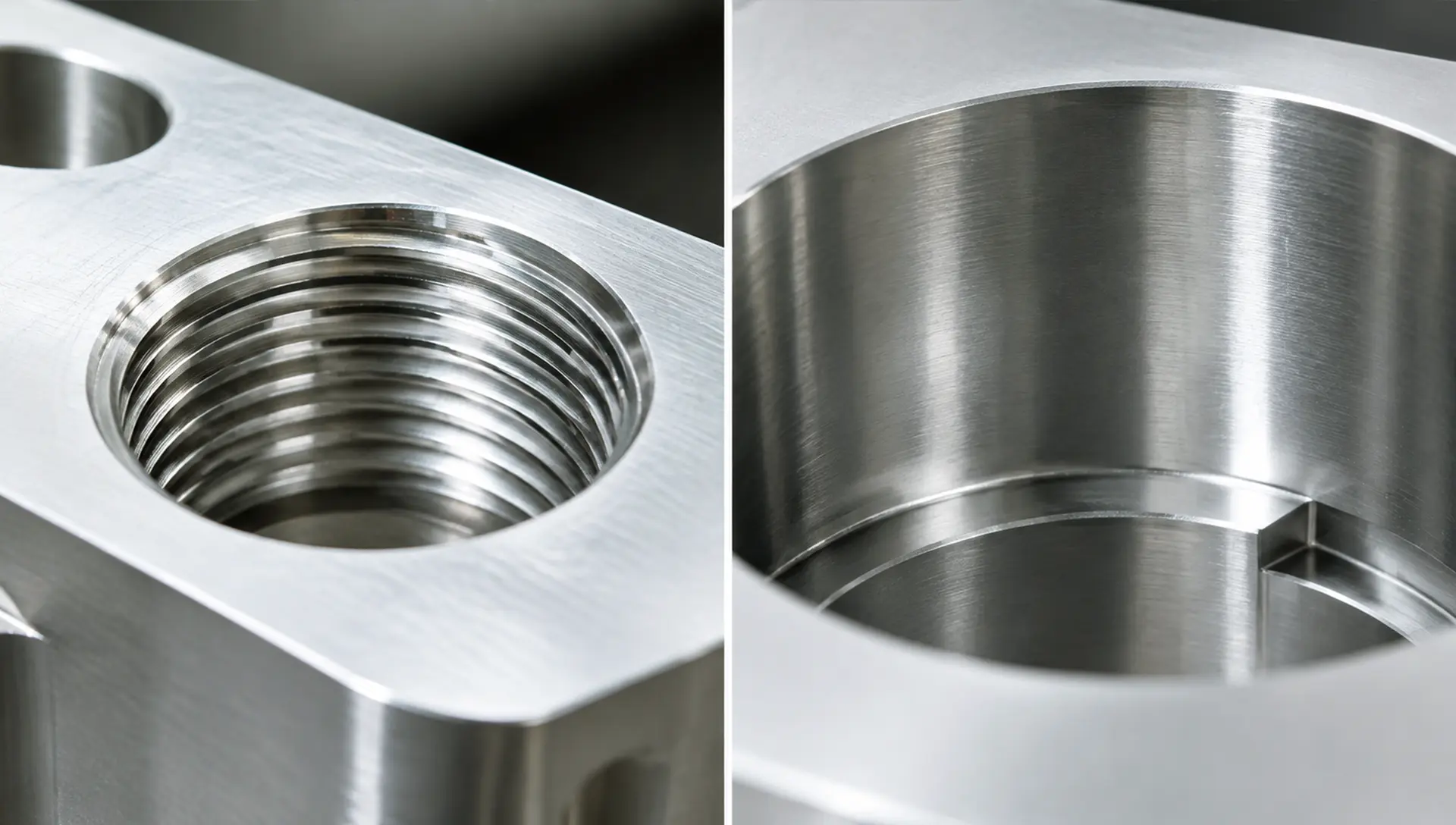
Both alloys can produce high-quality machined surfaces. Final appearance depends on tool condition, cutting settings, machine stability and tool path. After machining, common finishes include anodising, hard anodising, bead blasting, polishing, painting and powder coating.
A good finish starts during machining. Deep tool marks or poor surface control can remain visible after anodising.
6061 vs 7075 Applications by Industry
Industry name alone should not decide the alloy, but it helps identify the main risks. The best material still depends on load, weight, environment, finish and cost.
Electronics, Industrial Machinery and Prototypes
6061 is usually the practical choice for electronic housings, control boxes, fixtures, machine brackets, mounting plates and functional prototypes. These parts often need good machinability, accurate holes, a clean anodised finish and reasonable cost. 7075 may be unnecessary unless the part carries a high load.
For prototypes, 6061 is especially useful when the goal is to check shape, fit, assembly and basic function. However, if the prototype is being used for a real strength or load test, it should use the material planned for production. A 6061 prototype cannot prove the final strength of a design that will eventually depend on 7075.
Automotive, Robotics and Automation
Both alloys are used in automotive and automation projects. 6061 works well for housings, frames, brackets and general robot components. 7075 becomes more attractive for high-load robot joints, lightweight moving arms, motorsport parts and structures where reducing weight can improve speed or energy use.
A normal machine bracket may perform perfectly in 6061, while a racing or robotic part that sees repeated high stress may benefit from 7075. Looking at load direction, fixing points and repeated movement is more useful than choosing a material only because the part belongs to the automotive or robotics industry.
Drones, UAVs and Aerospace
Weight is especially important in drones and aerospace systems. 6061 can work well for housings, lower-load mounts and test fixtures. 7075 is often preferred for high-load brackets, frames and structural parts because it gives much more strength with only a small increase in density.
The higher strength can sometimes allow a designer to reduce section size while still meeting the load target, but that decision should be made from the complete design. Very thin geometry can create machining and stiffness problems even when the alloy itself is strong. Material strength and manufacturability must therefore be considered together.
Application rule: use 6061 when you need practical all-round performance; use 7075 when high strength and low weight directly improve the design.

6061 or 7075: Which Should You Choose?
The decision becomes easier when you look at the real job of the part instead of comparing one material number.
Choose 6061 If You Need
· Good general strength
· Easy and economical CNC machining
· Better corrosion resistance
· Welding after machining
· More predictable cosmetic anodising
· General-purpose engineering parts
· Prototype or low-volume production where very high strength is not required
Choose 7075 If You Need
· Very high strength
· High load capacity
· Good fatigue performance
· Low weight in a strong structure
· Aerospace, drone or high-performance mechanical use
· A real design benefit from the extra strength
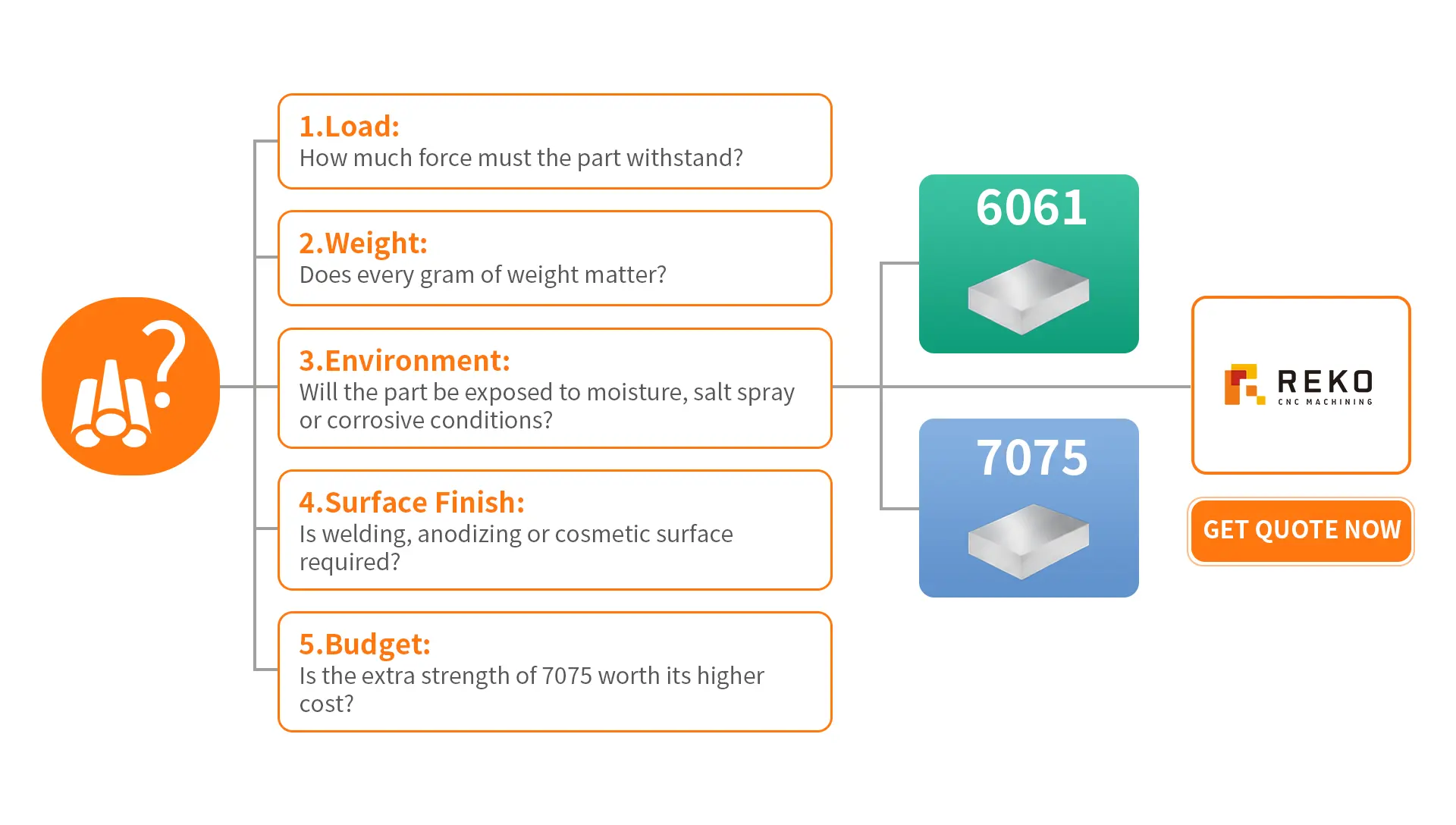
Five Questions Before You Decide
1. Load: how much force must the part carry?
2. Weight: does every gram matter?
3. Environment: will the part face moisture, salt or corrosion?
4. Finish: does it need welding, anodising or a cosmetic surface?
5. Budget: does the extra strength of 7075 create enough value to justify the higher cost?
If 6061 safely meets the design requirement, it is often the more economical choice. If the design genuinely needs the strength of 7075, the higher cost can make sense.
If your 2D drawing or 3D model is ready, you can request a CNC machining quote from REKO. We can review whether 6061 or 7075 is the more practical choice for the part.
6061 vs 7075 Aluminum FAQs
1. Is 7075 stronger than 6061?
Yes. 7075 is much stronger and is better suited to high-load or weight-sensitive structural parts. 6061 still provides enough strength for many general CNC components.
2. Is 7075 much heavier than 6061?
No. Both are lightweight aluminium alloys, and the density difference is small. 7075 offers much higher strength without a major weight increase.
3. Which is easier to machine?
6061 is generally easier and more forgiving to machine. 7075 also machines well, but its higher hardness can require more careful tool and cutting control.
4. Which is better for anodising?
6061 is usually the easier choice when colour consistency and cosmetic appearance are important. 7075 can also be anodised, but colour may be less predictable.
5. Can 7075 be welded?
7075 is generally not recommended for normal welding. If welding is part of the production plan, 6061 is usually the safer option.
6. Why is 7075 more expensive?
The raw material normally costs more, and some parts may require more careful machining. Use 7075 when the extra strength is needed, not simply because its mechanical properties look better on paper.
7. Which alloy is better for CNC machining overall?
For most general parts, 6061 is the better all-round choice. For high-strength lightweight parts, 7075 is often the better choice.
CNC Machining 6061 and 7075 Aluminum With REKO
Choosing the alloy is only the first step. The machining plan must also match the part. At REKO, we support CNC machining of 6061 and 7075 aluminium for prototypes and low- to medium-volume production.
If the customer already has a material specified, the job can be reviewed around that requirement. If the material is still open, the drawing and application can be compared before production. The aim is not to push the more expensive grade; it is to choose the grade that gives enough performance with sensible machining and finishing risk.
Before production, we can review part geometry, wall thickness, tolerance, surface finish, load, working environment, quantity and target cost. Two parts made from the same alloy may still need very different cutting and clamping strategies.
From Drawing to Finished Part
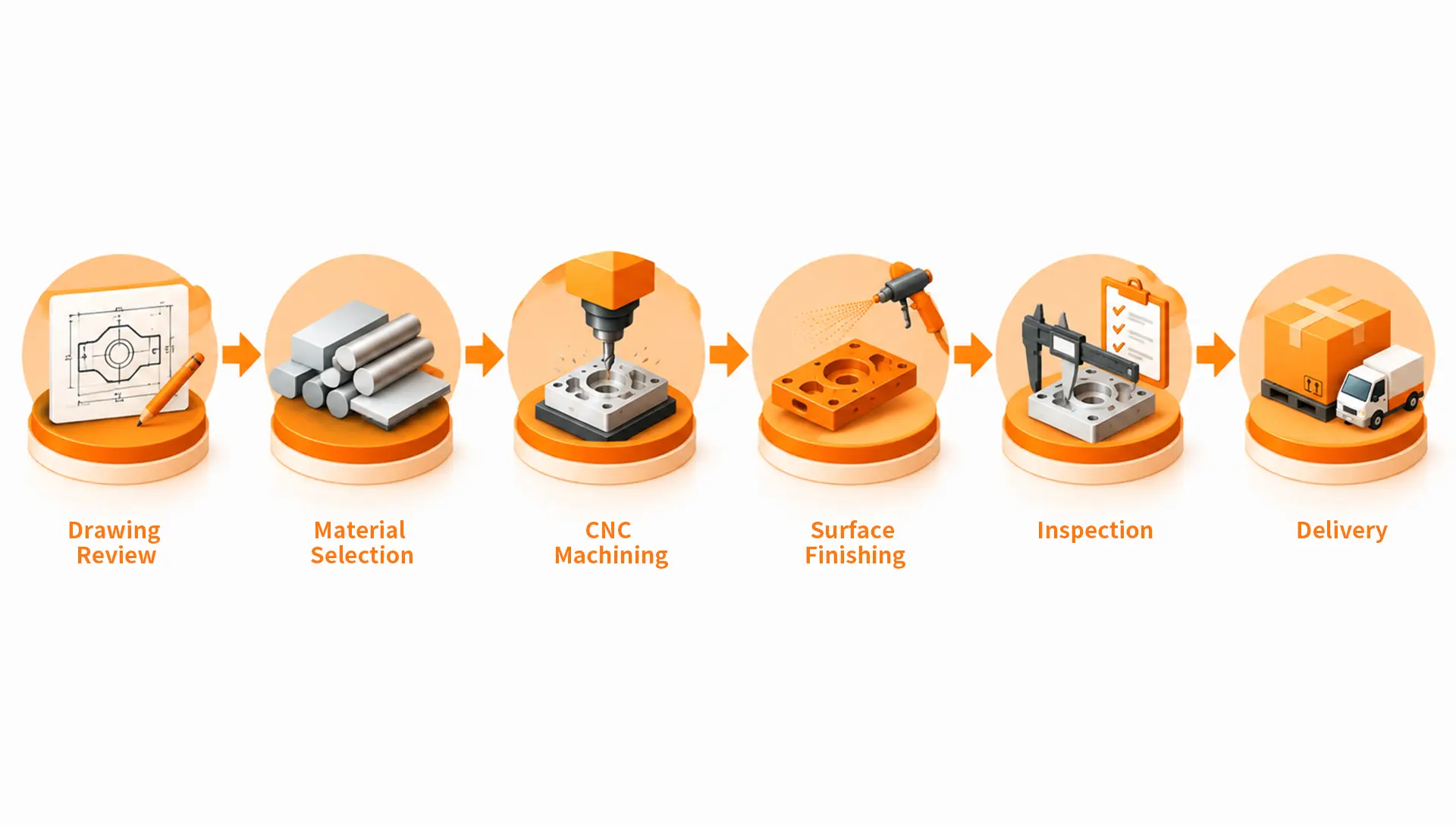
A typical project can move through drawing review, material selection, CNC machining, surface finishing, inspection and delivery. Considering the finish early is important because anodising or coating can affect appearance and final dimensions.
Need Help Choosing Between 6061 and 7075?
Before you send your drawings, you can review REKO’s aluminum CNC machining materials to compare common grades and finishing options. Then send REKO your 2D drawing or 3D model, target quantity, key tolerances, surface finish and application information. We can review whether 6061 or 7075 is the more practical fit for the part.
The right material should meet the real requirement without adding unnecessary cost or production risk.
Ready to move forward? Request a Quote and send REKO your drawing, quantity, tolerance and surface finish requirements.