


Bead Blasting vs Sandblasting: Key Differences for CNC Parts
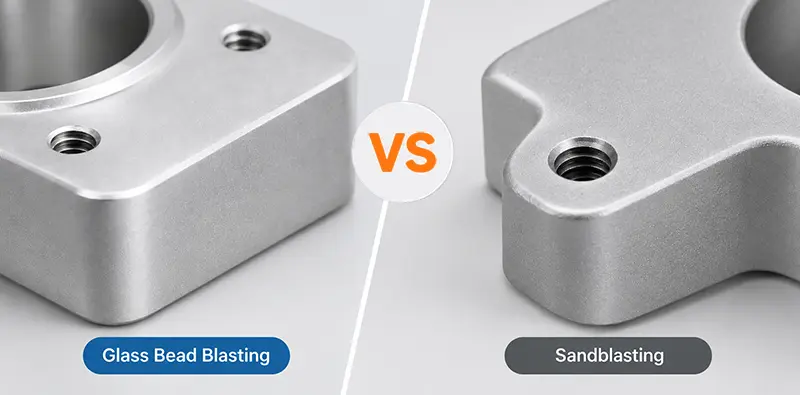
Bead blasting and sandblasting are common abrasive finishing processes for CNC machined parts. Bead blasting creates a smooth, uniform matte finish with minimal material removal, while sandblasting provides stronger cleaning and roughening. The right choice depends on material, surface requirements, tolerances, and subsequent finishing.
Table of Contents
- Bead Blasting vs Sandblasting: Quick Comparison
- Is Bead Blasting the Same as Sandblasting?
- What Is Bead Blasting?
- What Is Sandblasting?
- Bead Blasting vs Sandblasting: Key Differences
- 120# Glass Bead Blasting for CNC Milled Aluminum Parts
- 120# vs 150# Glass Bead Blasting: What Is the Difference?
- Does Sandblasting Affect CNC Part Dimensions and Anodizing Results?
- Common Bead Blasting and Sandblasting Problems
- Frequently Asked Questions About Bead Blasting vs Sandblasting
- Conclusion: Choosing the Right Finish Between Bead Blasting and Sandblasting
Bead Blasting vs Sandblasting: Quick Comparison
Before choosing a surface finishing process, understanding the basic differences between bead blasting and sandblasting can help determine which method is more suitable for your CNC parts.
| Comparison | Bead Blasting | Sandblasting |
|---|---|---|
| Abrasive Media | Glass beads or ceramic beads | Aluminum oxide, silicon carbide, garnet, and other abrasive media |
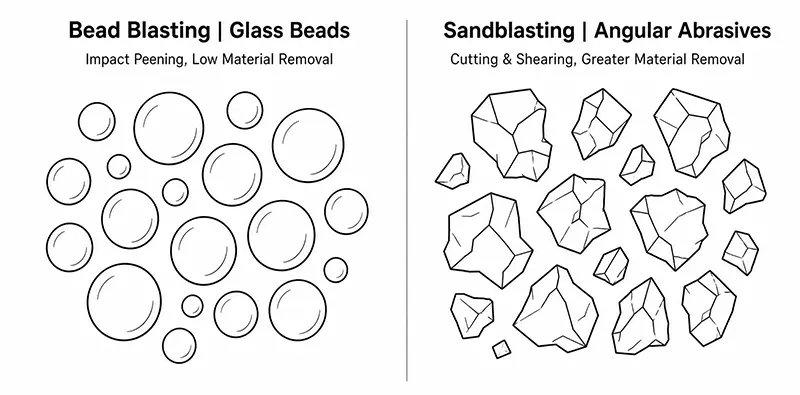
| Particle Shape | Mainly spherical particles | Usually angular particles |
| Surface Effect | Smooth and uniform matte finish | Rougher texture with stronger surface modification |
| Material Removal | Relatively low | Higher cutting and cleaning ability |
| Main Purpose | Improve appearance and surface consistency | Cleaning, surface preparation, and roughening |
| Surface Texture | Fine, satin-like finish | More aggressive texture |
| Common Materials | Aluminum alloys, stainless steel, cosmetic CNC parts | Steel, carbon steel, industrial components |
| Typical Applications | CNC housings, electronic parts, automotive appearance parts | Rust removal, coating preparation, industrial cleaning |
| Suitable Before Anodizing | Very common for aluminum parts | Less commonly used for cosmetic anodized finishes |
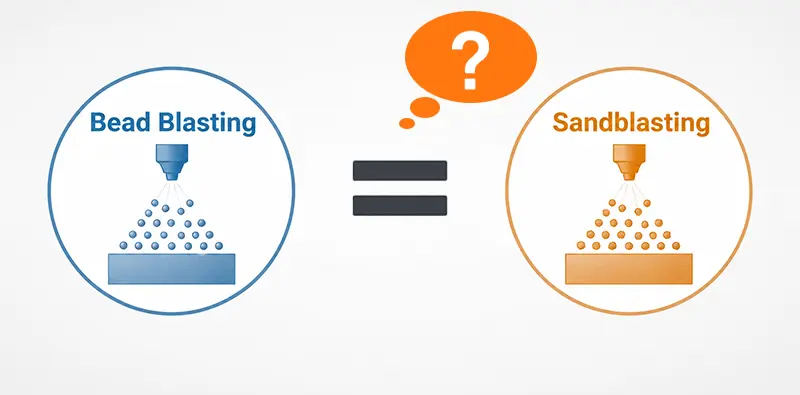
Is Bead Blasting the Same as Sandblasting?
Although bead blasting and sandblasting are both abrasive blasting processes, they are not exactly the same. The main difference comes from the abrasive media. Bead blasting uses round particles, usually glass beads, that impact the surface in a more controlled and gentle way. Instead of aggressively cutting into the material, the spherical beads create a uniform micro-texture on the surface.
This makes bead blasting suitable for applications where appearance and consistency are important, especially:
· Aluminum CNC housings
· Consumer electronics components
· Automotive appearance parts
· Medical equipment components
· Precision mechanical parts
Sandblasting uses sharper and harder abrasive particles. These particles create stronger impact and cutting effects, which makes sandblasting more suitable for:
· Removing oxidation layers
· Cleaning metal surfaces
· Increasing surface roughness
· Preparing surfaces before painting or coating
In simple terms:
Bead blasting focuses more on surface appearance and uniformity. Sandblasting focuses more on cleaning, surface preparation, and stronger material modification.
However, bead blasting can also be considered one type of abrasive blasting process. The difference is mainly the abrasive media, surface effect, and intended application.
What Is Bead Blasting?
Bead blasting is a surface finishing process that uses compressed air to propel small spherical abrasive particles, commonly glass beads, onto a component surface. When glass beads impact the surface, they create a controlled micro-texture without removing significant amounts of material. Because the particles are rounded, the process produces a smoother and more consistent finish compared with sharper abrasive media.
For CNC machined parts, bead blasting is commonly used to:
· Reduce visible CNC machining marks
· Create a uniform matte appearance
· Improve surface consistency between different machining areas
· Prepare aluminum parts for anodizing
· Improve the overall cosmetic quality of precision components
Glass bead blasting is especially common for aluminum CNC parts because aluminum is relatively soft and often requires a high-quality appearance finish. In REKO’s CNC machining projects, glass bead blasting is mainly used for aluminum alloy components because it provides a consistent matte surface while maintaining the material’s natural metallic appearance.
Why Is Glass Bead Blasting Popular for Aluminum CNC Parts?
Aluminum alloys such as 6061 and 7075 are widely used in CNC machining because of their excellent machinability and strength-to-weight ratio. However, after machining, the surface may show visible tool marks, especially on large flat areas or complex cosmetic surfaces.
Glass bead blasting helps improve the appearance by:
· Reducing the visibility of machining lines
· Creating a consistent surface texture
· Producing a soft matte metallic appearance
· Improving appearance consistency before anodizing
A common aluminum surface finishing process is:
CNC Machining → Deburring → Glass Bead Blasting → Cleaning → Anodizing
For example:
6061-T6 Aluminum + CNC Milling + Glass Bead Blasting + Black Anodizing
is a commonly used combination for:
· Industrial equipment housings
· Automotive components
· Bicycle parts
· Automation equipment
· Precision mechanical enclosures
What Is Sandblasting?
Sandblasting is an abrasive surface treatment process that uses compressed air to propel abrasive particles onto a component surface at high speed.
When abrasive particles impact the surface, they remove contaminants, modify surface texture, and create a specific level of roughness depending on the abrasive type, particle size, pressure, and processing parameters.
Unlike bead blasting, which focuses more on creating a smooth and uniform appearance, sandblasting is generally used when stronger surface cleaning or surface preparation is required.
Common purposes of sandblasting include:
· Removing oxidation layers
· Cleaning metal surfaces
· Removing rust and contaminants
· Increasing surface roughness
· Preparing surfaces before painting, coating, or other treatments
· Improving coating adhesion
For CNC machined parts, sandblasting is commonly applied to:
· Carbon steel components
· Alloy steel parts
· Industrial mechanical parts
· Parts requiring coating or painting
The final surface effect depends heavily on the abrasive media selected.
Common sandblasting abrasives include:
· Aluminum oxide (white alumina or brown alumina)
· Silicon carbide
· Garnet
· Ceramic abrasives
· Steel grit or steel shot
Among these abrasives, aluminum oxide is one of the most commonly used options for CNC steel parts because of its high hardness and strong cutting ability.
Bead Blasting vs Sandblasting: Key Differences
Although bead blasting and sandblasting both use abrasive media, the differences in particle shape, hardness, and application purpose create very different surface results.
1. Difference in Abrasive Media
The biggest difference between bead blasting and sandblasting is the abrasive material.
Bead Blasting
Bead blasting mainly uses spherical media such as:
· Glass beads
· Ceramic beads
The round particle shape creates a softer impact on the surface. Instead of aggressively cutting the material, the beads produce a controlled micro-texture that results in a smooth and consistent matte finish.
Sandblasting
Sandblasting usually uses sharper and harder abrasive materials, such as:
· Aluminum oxide
· Silicon carbide
· Garnet
These angular particles have stronger cutting ability and can remove surface material more effectively.
Therefore, sandblasting is often selected when the purpose is:
· Surface cleaning
· Oxidation removal
· Roughness improvement
· Coating preparation
2. Difference in Surface Finish
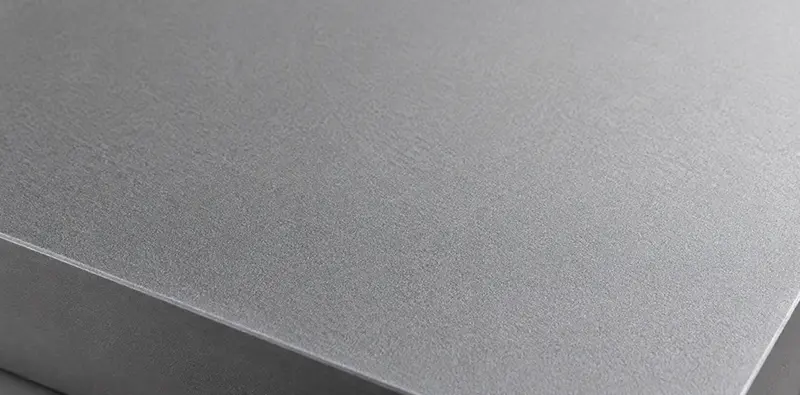
The surface appearance created by bead blasting and sandblasting is significantly different.
Bead Blasting Surface Finish
Bead blasting typically creates:
· Smooth matte appearance
· Satin-like texture
· Uniform metallic look
· Reduced visibility of machining marks
Because of this, bead blasting is widely used for CNC aluminum cosmetic parts.
Typical applications include:
· Aluminum housings
· Electronic enclosures
· Bicycle components
· Automotive appearance parts
· Precision equipment covers
Sandblasting Surface Finish
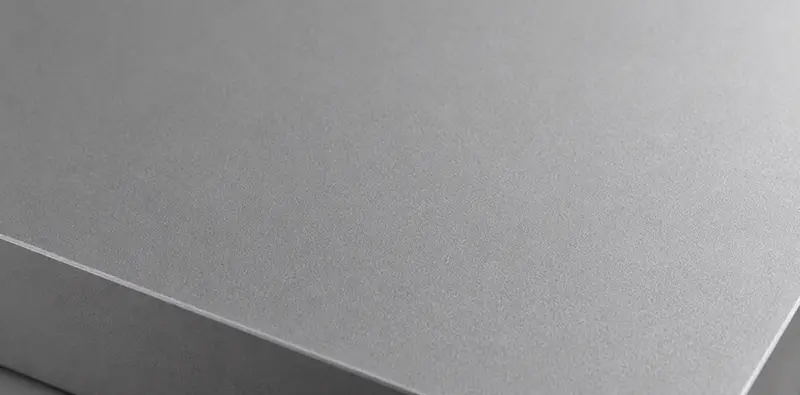
Sandblasting usually creates:
· More aggressive texture
· Higher surface roughness
· Stronger surface modification
It is commonly used when appearance is not the only goal.
Typical applications include:
· Steel parts before painting
· Industrial equipment
· Structural components
· Parts requiring strong coating adhesion
3. Difference in Material Removal Ability
Another important difference is how much material each process removes.
| Comparison | Bead Blasting | Sandblasting |
|---|---|---|
| Impact Effect | Gentle | More aggressive |
| Material Removal | Low | Higher |
| Surface Modification | Controlled | Strong |
| Main Purpose | Appearance improvement | Cleaning and preparation |
For precision CNC parts, excessive material removal may affect:
· Surface dimensions
· Sharp edges
· Small features
· Tight tolerance areas
Therefore, bead blasting is often preferred for appearance-critical aluminum parts where dimensional control is important.
4. Difference in Typical Applications
The best choice depends on the material and the final purpose of the component.
Bead Blasting Applications
Bead blasting is commonly used for: Aluminum CNC Parts
Examples:
· 6061 aluminum housings
· 7075 aluminum structural parts
· CNC machined covers
· Electronic equipment components
Typical process:
CNC Machining → Glass Bead Blasting → Anodizing
This combination creates a durable and visually consistent matte finish.
Sandblasting Applications
Sandblasting is commonly used for: Steel CNC Parts
Examples:
· Carbon steel components
· Alloy steel parts
· Industrial machinery components
Typical process:
CNC Machining → Sandblasting → Coating / Painting
The stronger cleaning ability helps improve coating adhesion and surface performance.
Glass Bead Blasting vs White Aluminum Oxide Blasting
For CNC machining projects, two common abrasive choices are glass beads and white aluminum oxide.
Their main differences are:
| Comparison | Glass Bead Blasting | White Aluminum Oxide Blasting |
|---|---|---|
| Particle Shape | Round | Angular |
| Hardness | Lower | Higher |
| Cutting Ability | Gentle | Strong |
| Surface Effect | Smooth matte | Rougher texture |
| Main Application | Appearance finishing | Cleaning and surface preparation |
| Common Materials | Aluminum, stainless steel | Steel, hard metals |
Why Aluminum Parts Usually Use Glass Bead Blasting
Aluminum alloys are relatively soft compared with steel materials.
If a very aggressive abrasive is used, it may:
· Create excessive roughness
· Damage cosmetic surfaces
· Make anodized color consistency more difficult
· Highlight uneven machining areas
Glass bead blasting provides a better balance between:
· Surface appearance
· Texture consistency
· Dimensional control
This is why glass bead blasting is commonly selected for aluminum CNC parts that require:
· Matte appearance
· High cosmetic quality
· Anodizing afterward
Why Steel Parts Often Use White Aluminum Oxide Blasting
Steel materials have higher hardness and are often used in applications where surface preparation is more important than appearance.
White aluminum oxide blasting provides:
· Strong cleaning capability
· Effective oxidation removal
· Increased surface roughness
· Better preparation before coating
For steel CNC components, the process is often:
CNC Machining → White Aluminum Oxide Blasting → Coating / Black Oxide / Painting
120# Glass Bead Blasting for CNC Milled Aluminum Parts
CNC milled aluminum parts often contain:
· Large flat surfaces
· Pockets
· Side walls
· Steps
· Complex machined areas
These areas may show visible milling marks after machining.
Compared with finer media, 120# glass bead blasting can provide a good balance between:
· Reducing machining marks
· Maintaining surface smoothness
· Creating consistent matte texture
For many CNC milled aluminum components, a process combination such as: 6061-T6 Aluminum + CNC Milling + 120# Glass Bead Blasting + Black Anodizing is commonly selected.
Bead Blasting vs Sandblasting for CNC Machined Parts
For CNC machining projects, the correct blasting method depends mainly on the material and final application.
Aluminum CNC Parts
For aluminum components requiring a high-quality appearance, bead blasting is usually preferred.
Typical process:
CNC Machining → Deburring → Glass Bead Blasting → Cleaning → Anodizing
Advantages:
· Uniform matte appearance
· Better cosmetic consistency
· Suitable for anodized finishes
· Lower risk of excessive surface damage
Common applications:
· Aluminum housings
· Electronic enclosures
· Automotive components
· Bicycle parts
· Automation equipment parts
Steel CNC Parts
For steel components, sandblasting with harder abrasives such as white aluminum oxide is often more suitable.
Typical process:
CNC Machining → White Aluminum Oxide Blasting → Coating / Painting / Black Oxide
Main purposes:
· Remove oxidation
· Clean the surface
· Increase roughness
· Improve coating adhesion
Common applications:
· Carbon steel components
· Industrial equipment parts
· Mechanical structures
· Engineering components
120# vs 150# Glass Bead Blasting: What Is the Difference?
For aluminum CNC parts, glass bead blasting is one of the most commonly selected finishing processes.
Different glass bead sizes can create different surface textures. In general:
· Larger particles usually create a more noticeable texture.
· Smaller particles usually create a smoother and finer appearance.
However, glass bead size alone does not determine the final finish.
The actual surface result is also affected by:
· Blasting pressure
· Blasting distance
· Spray angle
· Processing time
· Aluminum alloy type
· Machined surface condition
· Subsequent finishing process
Therefore, 120# and 150# glass bead blasting should not be considered fixed industry standards for specific CNC processes.
They are commonly used process choices based on production experience and appearance requirements.
150# Glass Bead Blasting for CNC Turned Aluminum Parts
For CNC turned aluminum parts, finer glass bead sizes such as 150# are often selected when a smoother and more refined appearance is required.
CNC turned components usually contain:
· Cylindrical surfaces
· Curved surfaces
· Circular features
· Continuous turning marks
A finer blasting effect can help:
· Reduce the visibility of turning marks
· Create a more uniform matte appearance
· Maintain a smooth metallic texture
For example: 6061 Aluminum CNC Turning + 150# Glass Bead Blasting + Anodizing is commonly used for aluminum components where appearance consistency is important.
Does Sandblasting Affect CNC Part Dimensions and Anodizing Results?
Although blasting usually creates only a small dimensional change, it is still a process that affects the surface. For most general areas, the dimensional impact is minimal.
However, special attention should be given to:
· Precision holes
· Bearing fits
· Threads
· Sealing surfaces
· Assembly surfaces
· Tight tolerance areas
· Thin-wall structures
For these areas, protective masking may be required before blasting.
Common protection methods include:
· Plugs
· Protective caps
· Tape
· Custom fixtures
For precision CNC projects, it is recommended to define blasting requirements during the engineering review stage.
The drawing should clearly indicate:
· Areas requiring blasting
· Areas that must be protected
· Surface finish requirements
· Final coating requirements
Sand Blasting Before Anodizing: What You Need to Know
For aluminum CNC parts, bead blasting and anodizing are often combined because they solve different surface requirements.
Bead Blasting
Main purpose:
· Creates surface texture
· Improves appearance
· Reduces machining marks
Anodizing
Main purpose:
· Creates an oxide layer
· Improves corrosion resistance
· Provides color options
· Enhances surface protection
A common aluminum finishing process is: CNC Machining → Glass Bead Blasting → Cleaning → Anodizing
The final appearance depends on controlling all three stages:
1. CNC machining quality
2. Blasting consistency
3. Anodizing process control
If the blasting surface is inconsistent, anodizing may show:
· Color variation
· Different gloss levels
· Uneven appearance
Therefore, for cosmetic CNC parts, controlling only anodizing color is not enough.The machining surface and blasting process must also be controlled.
Common Bead Blasting and Sandblasting Problems
1. Uneven Surface Appearance
Possible causes:
· Different blasting distance
· Uneven spraying angle
· Different processing time
· Pressure fluctuation
· Operator variation
Solution:
· Maintain consistent blasting parameters
· Use approved samples
· Control process conditions
2. Color Difference After Anodizing
Possible causes:
· Different surface roughness
· Uneven blasting
· Inconsistent pre-treatment
Solution:
Machining + Blasting + Anodizing as one complete surface finishing process.
3. Excessive Surface Roughness
Possible causes:
· Abrasive media too aggressive
· Excessive blasting pressure
· Excessive processing time
Solution:
Select suitable:
· Abrasive type
· Particle size
· Pressure
· Processing time
How to Choose Between Bead Blasting and Sandblasting?
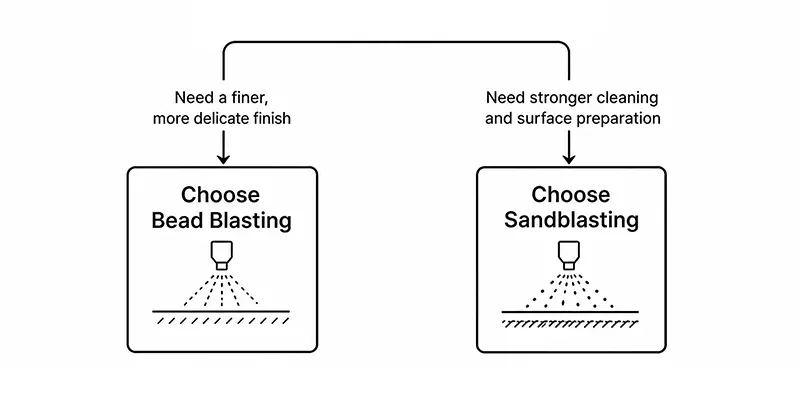
The selection depends on the final purpose of your CNC part.
Choose Bead Blasting When You Need:
✔ Smooth matte appearance
✔ Uniform cosmetic finish
✔ Aluminum CNC parts
✔ Parts requiring anodizing
✔ Reduced visibility of machining marks
Typical example: 6061 Aluminum Housing + Glass Bead Blasting + Black Anodizing
Choose Sandblasting When You Need:
✔ Strong cleaning ability
✔ Rust or oxide removal
✔ Surface roughening
✔ Coating preparation
✔ Steel part treatment
Typical example: Carbon Steel Component + Aluminum Oxide Blasting + Coating
How REKO Controls CNC Surface Finishing Quality
For CNC machined parts, achieving a high-quality surface finish requires more than selecting the correct blasting method.
The final appearance is influenced by the complete manufacturing process, including:
· CNC machining quality
· Material selection
· Blasting media
· Particle size
· Blasting parameters
· Surface treatment process
· Quality inspection
At REKO, we do not apply the same blasting process to every CNC component.
Instead, we evaluate each project based on:
· Part material
· CNC machining method
· Product structure
· Surface appearance requirements
· Dimensional tolerance requirements
· Subsequent finishing requirements
· Customer samples or appearance standards
For aluminum CNC parts, our commonly used finishing process is: CNC Machining → Deburring → Glass Bead Blasting → Cleaning → Anodizing
For steel CNC components, the process may be: CNC Machining → White Aluminum Oxide Blasting → Coating / Surface Treatment
Learn more about our CNC surface finishing services for bead blasting, anodizing, coating, and other finishing options.
Typical CNC Surface Finishing Selection at REKO
| CNC Part Type | Recommended Blasting Process | Common Media | Main Purpose |
|---|---|---|---|
| Aluminum CNC cosmetic parts | Bead Blasting | Glass beads | Create uniform matte appearance |
| Aluminum CNC milled parts | Bead Blasting | 120# glass beads (commonly used) | Reduce milling marks and improve consistency |
| Aluminum CNC turned parts | Bead Blasting | 150# glass beads (commonly used) | Create finer surface texture |
| Steel CNC components | Sandblasting | White aluminum oxide | Cleaning, roughening, coating preparation |
These blasting parameters represent common production experience rather than fixed industry rules.
For high-requirement projects, REKO adjusts the process according to:
· Engineering drawings
· Surface finish requirements
· Customer-approved samples
· Material characteristics
· Final application requirements
CNC Surface Finishing Example: Aluminum Part with Bead Blasting and Anodizing
Project Requirement
A customer required a CNC machined aluminum component with:
· Uniform matte appearance
· Consistent surface texture
· Black anodized finish
· Stable appearance across production batches
Manufacturing Process
6061-T6 Aluminum → CNC Milling → Deburring → Glass Bead Blasting → Black Anodizing → Final Inspection
Surface Finishing Challenge
The main challenge was maintaining consistent appearance after anodizing.
Because anodizing color can be affected by the previous surface condition, controlling only the anodizing process is not enough.
The blasting process needed to maintain:
· Consistent texture
· Uniform roughness
· Stable appearance between different areas
Solution
REKO controlled:
· CNC machining parameters
· Glass bead blasting process
· Surface preparation before anodizing
· Final appearance inspection
Result
The finished parts achieved:
· Uniform matte appearance
· Consistent black anodized surface
Stable appearance during batch production
Frequently Asked Questions About Bead Blasting vs Sandblasting
Is bead blasting better than sandblasting?
Neither process is universally better. The right choice depends on the purpose of the surface treatment.
Bead blasting is usually more suitable when the goal is:
· Smooth matte appearance
· Cosmetic improvement
· Aluminum CNC finishing
Sandblasting is usually more suitable when the goal is:
· Strong cleaning
· Surface preparation
· Increasing roughness before coating
Is bead blasting the same as glass bead blasting?
In most CNC finishing applications, bead blasting refers to glass bead blasting. Glass beads are commonly used because their spherical shape creates a controlled and uniform surface texture.
Can bead blasting remove CNC machining marks?
Bead blasting can reduce the visibility of light machining marks.
However, it cannot completely hide:
· Deep tool marks
· Severe scratches
· Dents
· Poor machining surfaces
High-quality surface finishing starts with proper CNC machining before blasting.
Does sandblasting damage aluminum parts?
Sandblasting can affect aluminum depending on:
· Abrasive type
· Particle size
· Pressure
· Processing time
For cosmetic aluminum CNC parts, glass bead blasting is often preferred because it provides a more controlled surface effect.
Can bead blasting be used before anodizing?
Yes. Bead blasting before anodizing is a common finishing combination for aluminum CNC parts.
The process: CNC Machining → Glass Bead Blasting → Anodizing
can create:
· Matte appearance
· Consistent texture
· Improved cosmetic quality
Does blasting affect part dimensions?
Blasting usually has a limited dimensional effect, but sensitive areas should still be considered.
Special attention should be given to:
· Precision holes
· Threads
· Bearing surfaces
· Sealing areas
· Tight tolerance features
For these areas, masking or protective fixtures may be required.
Conclusion: Choosing the Right Finish Between Bead Blasting and Sandblasting
Bead blasting and sandblasting are both effective surface finishing methods for CNC machined parts, but they serve different purposes.
Bead blasting is mainly selected for appearance improvement, surface consistency, and cosmetic finishing, especially for aluminum CNC components.
Sandblasting is mainly selected for stronger cleaning, surface preparation, and roughening applications, especially for steel and industrial components.
For CNC aluminum parts requiring anodizing and a uniform matte appearance, glass bead blasting is often the preferred solution. For steel components requiring coating preparation or surface cleaning, abrasive sandblasting is commonly more suitable.
The best finishing process depends on:
· Material
· Surface requirements
· Dimensional tolerance
· Final application
· Subsequent treatment requirements
At REKO, we combine CNC machining experience with surface finishing knowledge to help customers select suitable blasting processes for their parts. From CNC milling and CNC turning to bead blasting, anodizing, and other surface treatments, we support customers with complete manufacturing solutions based on drawings, samples, and application requirements. If you need CNC parts with specific bead blasting or sandblasting requirements, send your drawings, materials, quantities, and surface finish requirements to our engineering team for evaluation.
Ready to start your project? Get a Quote