


REKO Adds a Smart Tool Cabinet: How It Supports More Stable CNC Machining
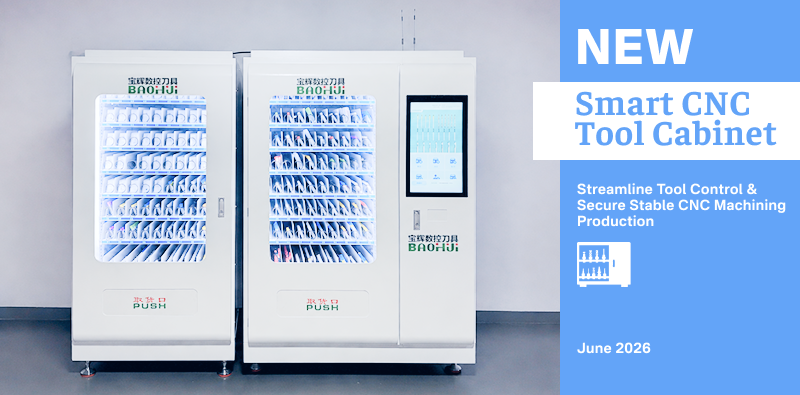
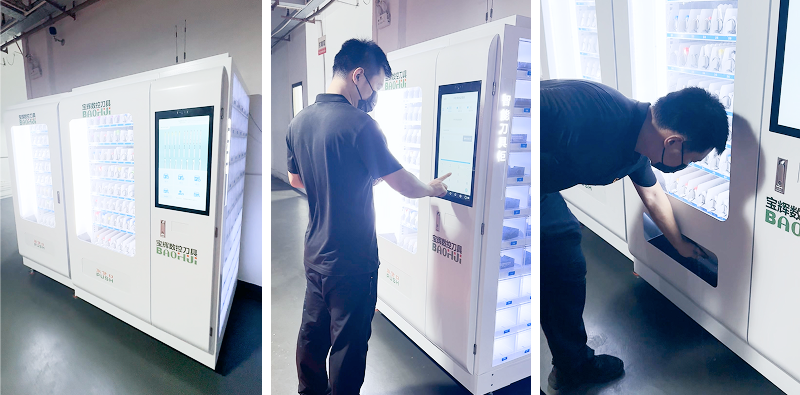
REKO has added a smart tool cabinet to improve CNC tool management and production preparation. The system helps operators quickly find tools, track stock and tool condition, manage tool taking and return, and organise tool regrinding. It also supports night-shift and batch production by reducing tool shortages, mixed storage, and time spent searching for tools, helping REKO build a clearer and more stable CNC machining process.
Table of Contents
Why Tool Management Matters
Cutting tools are the parts that directly touch the workpiece material during CNC machining. The machine provides the movement, the program controls the cutting path, and the tool actually cuts the material.
Different parts may need tools with different types, diameters, lengths, and conditions. One precision part may need many different tools.
· End mills
· Ball nose end mills
· Drills
· Reamers
· Boring tools
· Taps
· Thread mills
· Chamfer tools
· Grooving tools
· Turning inserts
Some tools look similar but are used for different jobs. Two end mills may have the same diameter but different cutting lengths, tool materials, or uses. Two taps may also look similar but have different thread sizes or pitches.
If tools are stored in many places, their condition is not clear, or workers mainly depend on memory, more time may be needed to find and check them.
For customers, these internal problems may lead to longer production preparation, machines waiting for tools, night-shift stops, continued use of worn tools, changes on finished surfaces, frequent tool changes during batch production, and even project delays.
So, tool management is not only part of workshop 5S. It is also part of production preparation and process management.
Tool Storage and Tool Search
1. CNC Cutting Tools
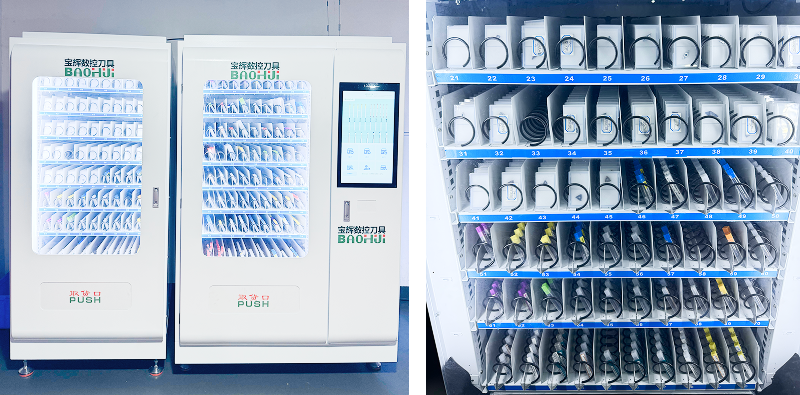
The smart tool cabinet stores the cutting tools used in daily production, including:
· End mills
· Ball nose end mills
· Drills
· Reamers
· Boring tools
· Taps
· Thread mills
· Chamfer tools
· Grooving tools
· Other milling and turning tools
2. Inserts
Turning and some milling jobs use replaceable inserts. Different inserts may match different materials, tool models, and machining jobs, so they need separate sorting and records.
3. Small Tool Parts
Some tools need small matching parts for correct fitting and use. These small parts are also entered into the system and stored in the right spaces.
Measuring tools and fixtures are not stored in this smart tool cabinet. Calipers, micrometers, plug gauges, thread gauges, fixtures, and other tools are managed in separate areas based on workshop rules. This helps stop different kinds of tools from being mixed together and keeps the purpose of the cabinet clear.
4. How Are Tools Sorted and Found?
REKO uses both system sorting and physical storage sorting to manage tools.
4.1 Tools Are Stored by Type
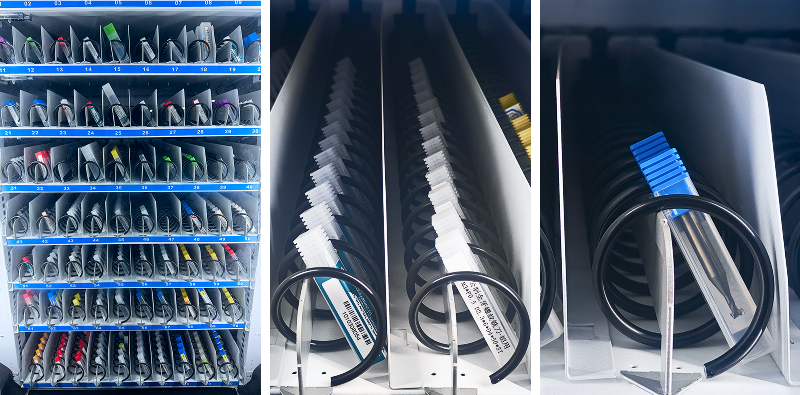
The smart tool cabinet has many separate storage spaces. Each space has its own storage number. Different kinds of tools are kept in different areas.
· Milling tool area
· Drilling tool area
· Threading tool area
· Insert area
· Small parts area
· Roughing tool area
· Finishing tool area
This physical sorting helps reduce mixed tools and also makes workshop checks easier.
4.2 The System Helps Operators Find Tools Quickly
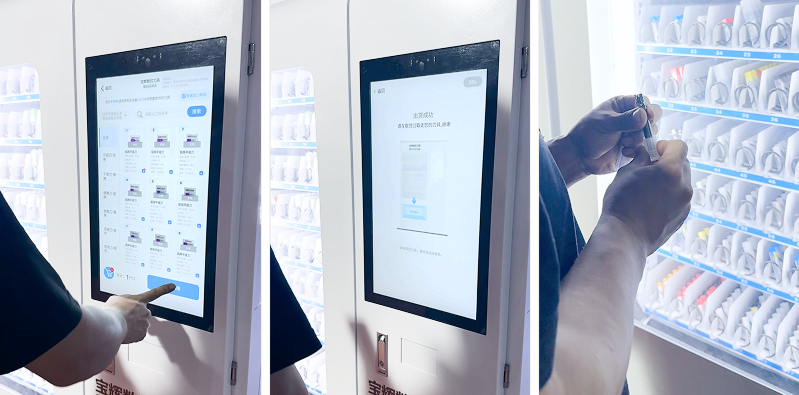
Operators can use the touch screen to find tools. The system shows information such as:
· Tool model
· Tool diameter
· Tool type
· Matching machine
· Current stock level
· Current tool condition
· Tool use records
· Storage number
After the needed tool is found, the system shows its storage place. Operators do not need to search through many drawers, tool carts, or areas next to machines. For customer orders, this clearer search method helps the production team check tool preparation before the machine starts.
Tool Taking, Return, and Condition Control
The smart tool cabinet is not a normal cabinet where anyone can take and return tools freely. REKO has clear rules for taking and returning tools.
1. Log In with an Employee Number
Operators must use their own employee number to log in to the smart tool cabinet system. The system records who takes each tool.
2. Take Tools Based on Production Needs
Operators search for tools based on the actual production job and take only what they need. Taking no more than needed helps stop tools from staying beside machines or on workbenches for a long time. It also keeps enough stock for other machines and shifts.
3. The System Updates Stock Automatically
After a tool is taken, the system automatically records:
· Operator name or number
· Time taken
· Tool quantity
· Tool condition
· Remaining stock
Daily stock is mainly recorded automatically by the smart tool cabinet system. Workers do not need to fill in normal paper forms item by item.
4. Tools Must Be Cleaned After Use
After use, operators must remove aluminium chips, steel chips, cutting fluid, oil, and other machining dirt from the tools. Cutting edges and related areas must be wiped clean before the tools are returned.
5. Check Tool Condition Before Returning
Operators need to check whether the cutting edge is worn, chipped, clearly damaged, or still suitable for use. Tools in good condition are scanned and returned to their fixed storage places. Worn or damaged tools cannot be returned as normal tools. The correct condition must be chosen in the system.
6. How Are Different Tool Conditions Separated?
REKO uses both the system and physical storage spaces to separate tools by condition.
· New tools
· Tools in normal use
· Worn tools
· Tools waiting for regrinding
· Scrapped tools
Tools with different conditions are marked separately in the system and stored in different spaces. Operators can filter normal tools, tools waiting for regrinding, and other tool conditions. This helps reduce the chance that a worn tool is taken again as a normal tool.
From a customer point of view, clear tool condition management is especially useful for repeat batch orders, multi-shift production, precision fit holes, appearance surfaces, high-precision housings, and parts with tight tolerances.
Operators need to check whether the cutting edge is worn, chipped, clearly damaged, or still suitable for use. Tools in good condition are scanned and returned to their fixed storage places. Worn or damaged tools cannot be returned as normal tools. The correct condition must be chosen in the system.
Regrinding, Tool Wear, and Runout Checks
1. Operator marks the tool for regrinding: If a tool is worn, chipped, or has another problem, the operator chooses “Waiting for Regrinding” on the touch screen and puts the tool in the correct storage space.
2. Manager exports the list: Every day, the tool manager exports a list of tools waiting for regrinding and arranges them to be sent for regrinding together.
3. Check after regrinding: After regrinding, the tool must be checked. Only tools that pass the check can be changed back to “Normal Use” in the system.
4. Scrap tools that cannot be repaired: Tools that cannot be repaired or used again are marked as scrapped and do not return to normal stock.
This process helps REKO clearly separate tools that can still be used, tools that need regrinding, and tools that cannot be used again. It also reduces the need to depend only on workers’ memory.
1. Why Are Roughing and Finishing Tools Kept Separate?
REKO keeps roughing tools and finishing tools in different storage spaces and marks them separately in the system.
1.1 Roughing Tools
Roughing usually removes more material. It focuses more on tool strength, chip removal, material removal speed, and stable machining.
1.2. Finishing Tools
Finishing decides the final size and surface of a part. REKO pays special attention to finishing tools used for:
· High-precision housings
· Precision fit holes
· High-gloss appearance surfaces
· Precision parts with tolerances within ±0.01 mm
For these jobs, the production team gives priority to new finishing tools or tools in very good condition.
However, tool condition alone cannot guarantee part accuracy. The final machining result also needs the right CNC machine, the correct program, stable fixtures, correct tool compensation, suitable cutting settings, first-piece inspection, in-process inspection, and final size inspection.
2. Why Must Tool Wear Be Handled in Time?
2.1 Machining Sizes May Change
When a cutting edge is worn, the real cutting condition changes. This may affect hole diameter, slot width, outside size, and other machining features.
2.2 Surface Finish May Become Worse
Worn tools may leave clearer tool marks, especially on finishing surfaces and appearance surfaces.
2.3 More Burrs May Appear
When the cutting edge becomes dull, the material may not be cut cleanly. This can cause more burrs on part edges.
2.4 Machining Sound May Change
When a tool is worn or cutting is not stable, machining noise may become louder.
2.5 Machine Load May Increase
Tool wear may increase cutting force and make the machine load higher.
2.6 Risk of Tool Breakage May Increase
Continuing to use a tool in poor condition may increase the risk of chipping, tool breakage, and scrapped parts.
For this reason, REKO asks operators to clean and check tools before returning them and to move worn tools into the regrinding process.
3. Does REKO Check Tool and Tool Holder Runout?
REKO regularly checks tool and tool holder runout. Common checking tools include dial indicators and test indicators. New tool holders and reground tools must be checked before they are put on a machine.
Too much runout in a tool or tool holder may affect size stability, surface quality, tool life, and cutting stability.
The smart tool cabinet does not check runout automatically. It manages storage, tool condition, and stock. Production workers still need to check real runout with measuring tools. The cabinet is one part of the full production and quality management process. It is not a device that “automatically guarantees accuracy”.
Stock Control and Night-Shift Support
Before adding the smart tool cabinet, REKO already had basic tool sorting, but there were still some real problems:
· Tools were stored in different places
· Finding tools took more time
· Taking tools was not easy enough
· Stock levels were not easy to see
· No tool manager was on duty during the night shift
· Short-term tool shortages were not easy to refill in time
· In serious cases, machines could stop production
To reduce these risks, the smart tool cabinet system counts stock in real time. REKO also carries out:
· Weekly physical stock checks
· One full stock count every month
· Weekly stock warning reports
· Minimum safe stock levels for common tools
When the stock of a common tool falls below the set level, the system warns the tool manager. The manager can check stock, count missing items, and send a purchase request earlier.
This is especially important for the night shift. Night-shift operators can log in with their employee numbers and take tools that are already prepared. They do not need the tool manager to be there all the time.
This does not mean tools will never run out, but it helps the team find the risk earlier and arrange new stock sooner.
Roles and Daily Management
REKO has a named tool manager. The tool manager is mainly responsible for:
· Stock counts
· Checking the system against real stock
· Counting missing items
· Restocking common tools
· Keeping storage numbers and labels correct
· Updating tool condition
· Purchase requests
· Lists of tools waiting for regrinding
· Updating tool condition after regrinding
Operators are mainly responsible for:
· Using their employee numbers to take tools
· Taking tools based on real needs
· Cleaning tools after use
· Checking cutting edge condition
· Scanning tools when returning them
· Marking worn tools for regrinding
· Helping keep the cabinet and storage spaces in order
This clear split of duties helps stop the tool cabinet from becoming an area that everyone uses but no one is truly responsible for.
Customer Benefits and Quality Limits
1. Clearer Production Preparation
Before production starts, the team can use the system to check whether the needed tools are in stock and where they are stored.
2. Less Time Spent Finding Tools
The touch screen and separate storage spaces reduce the need to search for tools in many different areas.
3. Earlier Warnings for Low Stock
Minimum-stock warnings help the manager find out earlier when common tools are running low.
4. Support for Multi-Shift Production
Night-shift operators can use their employee numbers to take prepared tools by themselves.
5. Less Confusion About Tool Condition
Normal, worn, waiting-for-regrinding, and scrapped tools are separated by both the system and their physical storage places.
6. A Clearer Regrinding Process
Tools waiting for regrinding have clear condition changes from return, list export, regrinding, checking, and back to use.
7. Support for Batch Production Management
For repeat batch production, clear tool stock, condition, and use records help the production team prepare replacement tools earlier.
8. Can the Smart Tool Cabinet Directly Guarantee Part Quality?
No. The smart tool cabinet alone cannot guarantee size, tolerance, surface roughness, or delivery time. The final result of CNC parts also depends on:
· Drawings and technical needs
· Raw materials
· Machine condition
· CNC program
· Fixtures
· Tool choice
· Tool installation
· Cutting settings
· Operators
· First-piece inspection
· In-process inspection
· Final inspection
Conclusion and About REKO
REKO’s new smart tool cabinet is not only a place to store tools. It connects tool model, diameter, matching machine, stock quantity, current condition, use records, and physical storage place.
Operators can use the touch screen to find tools, use their employee numbers to record tool use, and clean, check, scan, and return tools after use.
Worn tools enter the regrinding process. After regrinding and a successful check, they can return to normal use. Tools that cannot be used again are marked as scrapped.
The system records stock automatically and sets minimum safe stock levels for common tools. The tool manager checks stock every week, carries out a full stock count every month, and arranges restocking based on system warnings.
For customers, this improvement is not only about having a tidier workshop. Its greater value is clearer production preparation, less time spent finding tools, less tool mixing, earlier stock-risk warnings, better support for night and multi-shift production, clearer regrinding and scrap steps, and more organised tool management for finishing and batch production.
REKO will continue to improve its CNC machining service through better equipment, clearer processes, and careful daily management.
About REKO
REKO is based in Shenzhen, China, and provides services to customers around the world, including:
· CNC milling
· CNC turning
· 5-axis machining
· Rapid prototyping
· Low-volume production
· Repeat batch production
· Metal and engineering plastic machining
· Surface finishing support
· Size inspection
· Custom packaging
Visit the REKO website to learn more about our CNC machining services