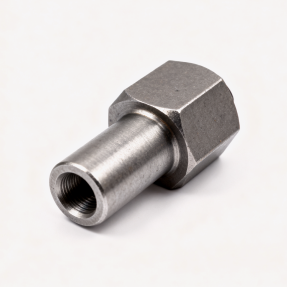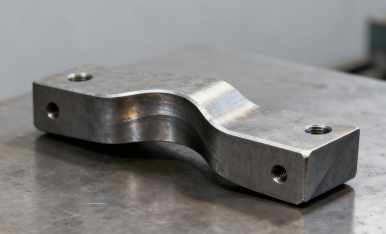

heat_treatment_banner

Heat Treatment Services for CNC Machined Parts

Improve strength, hardness, wear resistance, and fatigue life with precision-controlled heat treatment processes designed for CNC-machined components.

What is Heat Treatment?

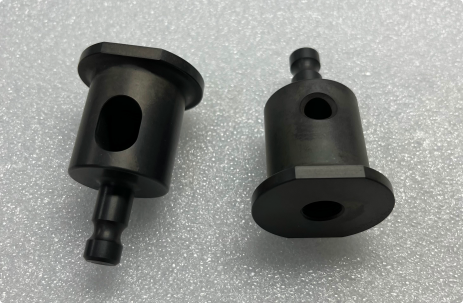
Heat treatment is a controlled thermal process that changes the mechanical properties of metals—such as hardness, strength, toughness, and ductility—without altering their overall shape.

For CNC machined parts, heat treatment is used to:
  • Enhance wear resistance
  • Improve fatigue performance
  • Increase structural strength
  • Prepare the material for subsequent machining or surface finishing
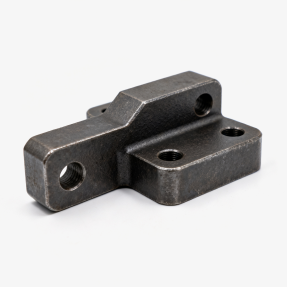
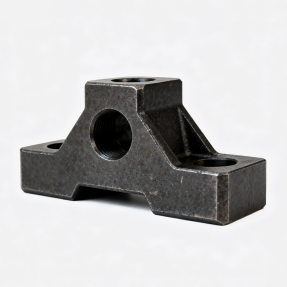
  • Heat treatment can be applied before machining, after machining, or as a final strengthening step, depending on material and performance requirements.
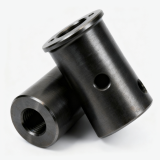
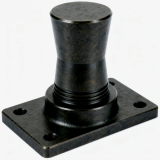
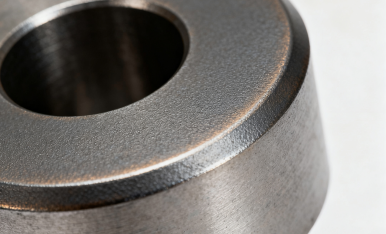
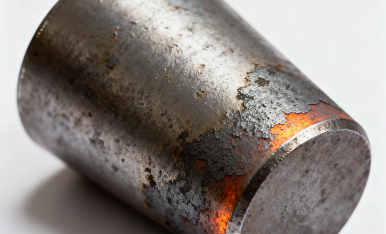
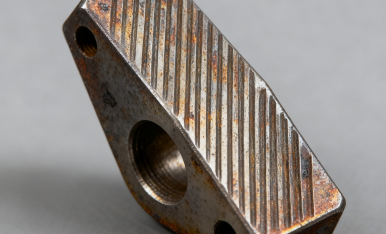
    cnc_machined_connector_after_heat_treatmentcnc_machined_connector_after_heat_treatment heat_treated_cnc_flange_mount_partheat_treated_cnc_flange_mount_part hardened_cnc_stepped_bushing_componenthardened_cnc_stepped_bushing_component
    CNC Milling

    CNC Milling

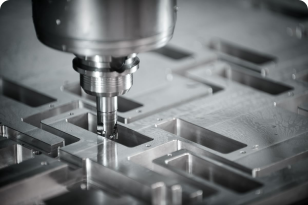
    Utilizes rotating cutting tools for high-precision machining of flat surfaces, curves, and complex parts, ideal for mold making, aerospace, and automotive industries.
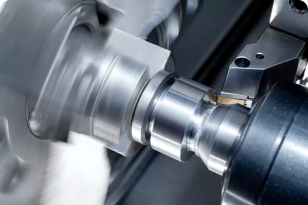
    CNC Turning

    CNC Turning

    Uses rotating workpieces and cutting tools for efficient machining of cylindrical components, widely applied in shafts, discs, and precision parts manufacturing.
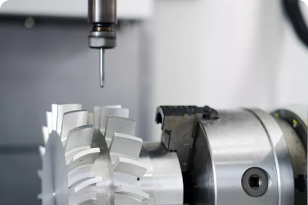
    5 Axis Machining

    5 Axis Machining

    Enables multi-angle precision cutting, reducing setups and machining complex surfaces, perfect for high-end aerospace, medical devices, and precision mold manufacturing.
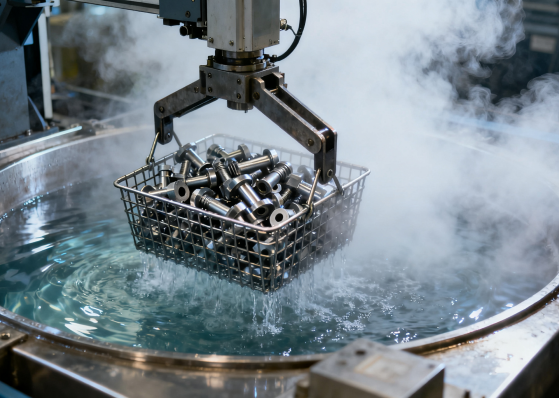
    Types of Heat Treatment Processes

    hardening_and_quenching_heat_treatment_process
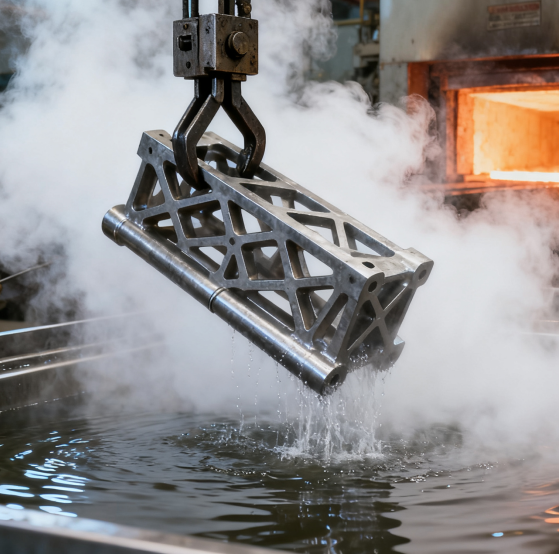
    Hardening & Quenching
  • Rapid heating followed by controlled cooling
  • Produces high hardness and exceptional wear resistance
  • Common for steels, tools, shafts, gears, and structural parts
  • Tempering
  • Reduces brittleness after quenching
  • Balances hardness and toughness
  • Widely used in automotive and machinery components
  • Annealing
  • Softens material for better machinability
  • Improves ductility and reduces internal stress
  • Ideal for aerospace and medical-grade metals
  • Normalizing
  • Refines grain structure
  • Enhances uniform mechanical performance
  • Used for steel housings, brackets, and welded parts
  • Case Hardening (Carburizing / Nitriding)
  • Hardens only the surface while keeping the core tough
  • Perfect for gears, pins, pistons, and wear-critical parts
  • Technical Advantages of Heat Treatment

    heat_treatment_quenching_process_with_metal_parts
    Strength Enhancement
    Increase tensile strength, load-bearing capacity, and long-term durability.
    Superior Wear Resistance
    Improve surface hardness for components subject to friction and repeated contact.
    Fatigue Life Improvement
    Reduce micro-cracks and internal stresses to extend service life.
    Dimensional Stability
    Proper heat treatment minimizes deformation during machining or assembly.
    Material Optimization
    Allows engineers to use lighter or more cost-efficient materials while maintaining performance.
    heat_treated_mechanical_bracket_component
    hardened_industrial_support_part_after_heat_treatment
    heat_treated_stepped_hexagonal_fastener
    heat_processed_annular_flange_component

    Common Polishing Defects

    quenching_deformation_polishing_defect
    Quenching Deformation
    Occurs when the cooling rate is too fast or the part has an uneven structure, resulting in bending, twisting, or dimensional deviations. Thin-wall parts, long shafts, and asymmetrical components are especially prone to this issue.
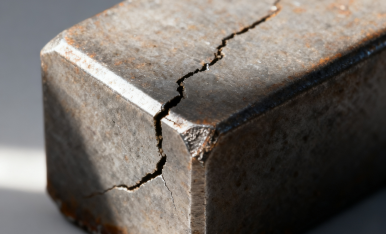
    cracking_defect_in_heat_treated_part
    Cracking
    Cracks form due to a sharp increase in internal stress after quenching. This commonly happens on sharp corners, areas with large cross-section changes, or parts requiring very high hardness. It is considered the most severe heat-treatment defect.
    overheating_and_grain_growth_polishing_issue
    Overheating & Grain Growth
    Excessive heating temperature causes grain enlargement, making the material brittle and reducing toughness. Components with coarse grains are more likely to fail from fatigue during long-term use.
    decarburization_surface_hardness_loss
    Decarburization
    Carbon is lost from the surface during heating due to oxidation, leading to reduced surface hardness. This significantly affects the wear resistance of gears, shafts, and other load-bearing components.
    insufficient_or_uneven_hardness_defect
    Insufficient or Uneven Hardness
    Caused by inadequate heating, insufficient soaking time, or unstable cooling media. This results in inconsistent mechanical properties and poor wear resistance.
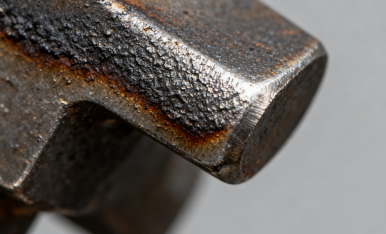
    discoloration_and_oxide_scale_polishing_problem
    Discoloration & Oxide Scale
    When heating without a protective atmosphere, the metal surface oxidizes, producing oxide scale or uneven coloration. Additional grinding or polishing is often required to restore surface quality.

    Heat Treatment Process Flow

    01
    Heating
    Controlled furnace heating to reach target temperature
    Notes: (Ensures uniform metallurgical transformation)
    Standards: In-house HT-SOP-01;
    Standards: In-house HT-SOP-01;
    heat_treatment_heating
    02
    Holding (Soaking)
    Maintaining temperature for a specific duration
    Notes: (Allows complete structural change)
    Standards: In-house HT-SOP-02;
    Standards: In-house HT-SOP-02;
    heat_treatment_holding
    03
    Cooling / Quenching
    Air, oil, water, or gas cooling based on material & requirements
    Notes: (Determines hardness level)
    Standards: In-house HT-SOP-03;
    Standards: In-house HT-SOP-03;
    heat_treatment_cooling
    04
    Tempering / Stress Relief
    Secondary heating to reduce brittleness and stabilize properties
    Notes: (Achieves ideal balance of hardness & ductility)
    Standards: In-house HT-SOP-04;
    Standards: In-house HT-SOP-04;
    heat_treatment_tempering
    05
    Inspection
    Hardness testing, deformation measurement, metallographic analysis
    Notes: (Ensures the part meets performance standards)
    Standards: In-house HT-SOP-05;
    Standards: In-house HT-SOP-05;
    heat_treatment_inspection
    06
    Final Machining / Surface Finishing
    Optional: grinding, polishing, anodizing, coating
    Notes: (Ensures assembly accuracy and appearance quality)
    Standards: In-house HT-SOP-06;
    Standards: In-house HT-SOP-06;
    heat_treatment_final_machining

    Applications & Industries

    aerospace_heat_treated_structural_part
    Aerospace

    Heat treatment increases fatigue life for brackets, housings, and structural parts.
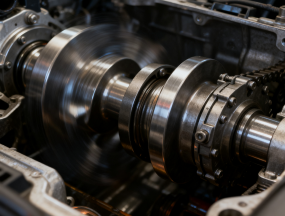
    automotive_power_train_component_heat_treatment
    Automotive

    Gears, shafts, pistons, and powertrain components require high toughness and wear resistance.
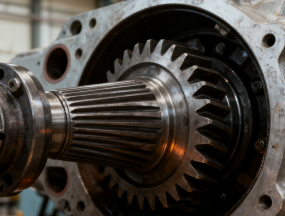
    motorcycle_bicycle_axle_gear_heat_treated_part
    Motorcycle / Bicycle

    Axles, hubs, sprockets, pedals—improved durability under dynamic load.
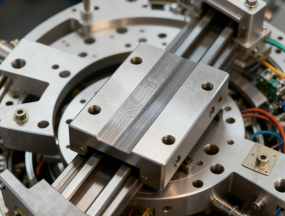
    industrial_machinery_hydraulic_component_heat_treatment
    Industrial Machinery

    Tooling, fixtures, hydraulic components, and high-pressure fittings.
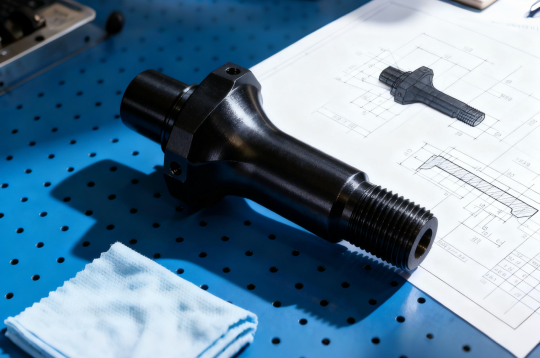
    Design & Quotation Guide

    cnc_machined_part_design_quotation_guide_with_technical_drawing

    When designing CNC machined parts that require heat treatment, please note the following points:

    Avoid placing critical tight-tolerance features on areas expected to deform during heat treatment;

    Add machining allowance to compensate for thermal deformation;

    Avoid sharp corners and sudden wall-thickness transitions;

    Clarify the required hardness range on the drawing;

    Specify critical surfaces or areas that must NOT be hardened;

    For complex shapes, 3D models or samples are recommended before mass production;

    Technical Specifications

    Typical heat treatment parameters for CNC machined parts:

    Parameter Typical Range Description
    Hardness Range HRC 20–65 (depending on material) Final hardness after quenching/tempering
    Heat Treatment Temperature 500–1,100°C Typical heating temperature range for common metals
    Cooling Method Air / Oil / Water / Gas Different cooling media affect hardness and distortion
    Dimensional Change ±0.05–0.3 mm Possible dimensional variation during heat treatment
    Case Depth 0.1–2.0 mm Depth of surface hardening (carburizing / nitriding)
    Material Compatibility Steel / Alloy Steel / Stainless Steel / Tool Steel Applicable materials for heat treatment processes
    Tips:

    For parts requiring high-precision assembly, it is recommended to perform heat treatment before grinding, milling, or turning critical dimensions.
    For easily deformable thin-walled structures, vacuum heat treatment or gas quenching should be used to reduce deformation.
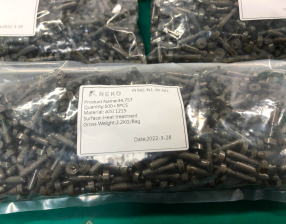
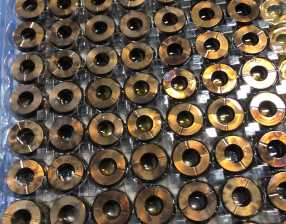
    aisi_1215_steel_heat_treated_parts_packaged
    AISI 1215 + heat treatment
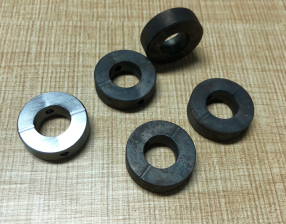
    steel_1030_heat_treated_ring_components
    Steel1030 + heat treatment
    steel_1030_heat_treated_circular_spacer_parts
    Steel1030 + heat treatment
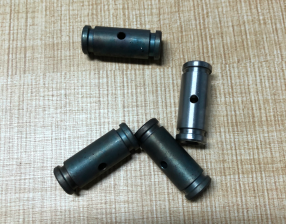
    steel_1030_heat_treated_cylindrical_pinion_components
    Steel1030 + heat treatment

    Request a Technical Evaluation

    Send us your part files or design drawings. Our surface finishing experts will evaluate the part geometry, surface requirements, and production volume and recommend the ideal machining process for your CNC machined parts.

    Start production now and get your parts faster.